
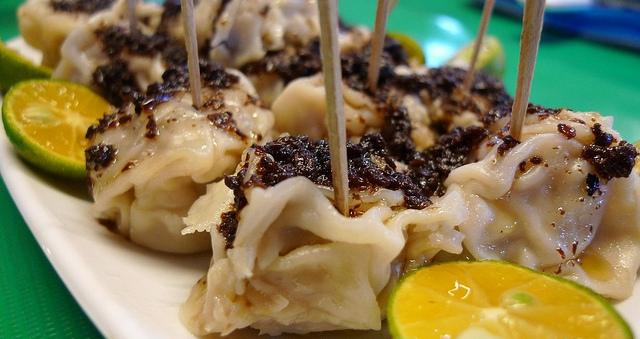
While the Philippines and China continue to square off over Scarborough and other disputed territories, a food trip through the streets of Binondo can easily make you forget about those territorial squabbles. While defining the boundaries of our country and that of our populous neighbor’s is simple enough for anyone who can read a map, identifying precisely when and where the Chinese influence on our cuisine starts and ends is a lot trickier. It’d be akin to trying to separate the components of a bowl of Yang Chow fried rice.
Our country’s trade with China started long before the Spaniards came. Scholars have found documents involving the Chinese that date all the way back to the 11th century while archaeologists have found numerous artifacts that had made their way to our shores at least two centuries prior.
Chinese merchants brought over pottery and silk in exchange for agricultural products like rattan and beeswax. Some of the merchants eventually settled here, and whenever they craved for a taste of home, they whipped up their native dishes using local ingredients. A number of Chinese migrants married Filipino women as well, all of whom later learned to cook their husbands’ favorites. Over time, the wives began to improvise and impart regional twists onto traditional Chinese recipes. As the years passed, the difference between Chinese and Filipino cuisines became virtually blurred and indistinct.
The following are just a handful of the Middle Kingdom’s delicacies that we Filipinos have come to embrace as our own.
 www.Thundercloud.com